
Public & private sewers
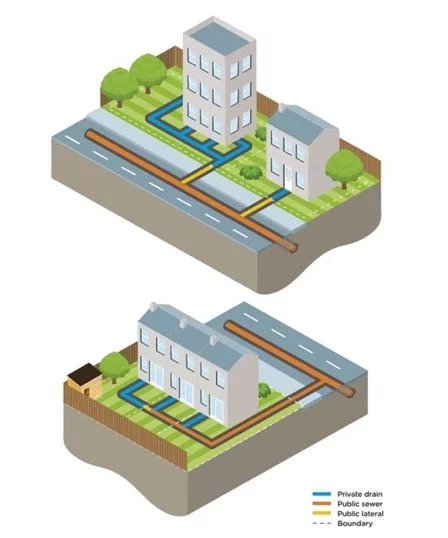
Homeowners own the pipework, that carries the waste or rainwater from their property, that is located within their land. These are called private drains.
Public sewers carry waste or rainwater from more than one property, and are the responsibility of the local water authority. If you want to connect to one, all asset owners will need to carry out an inspection after you’ve made the connection. We work with Thames Water, Anglian Water and Southern Water and cover areas across Suffolk, Kent, Essex, Hertfordshire, London and Cambridgeshire.
New drainage connections need to be agreed between the developer and the water authority, who may adopt all of the new pipework from the boundary to the connection point, or just the connection point itself. If the latter choice is made, and a homeowner has an issue with the pipework, they would have to rectify the problem (if this is within the highway it can be very costly). With this in mind, ensuring that the new sewer is built to the relevant standard is critical, so that it can be adopted by the water authority.
Connection methods:
Pre-formed junctions
Oblique and square pre-formed junctions can be used for sewer connections. It is good practice to have a boundary manhole no more than 1 metre into the boundary, to give good rodding/jetting access to the connection if it’s ever needed.
Oblique drainage junctions
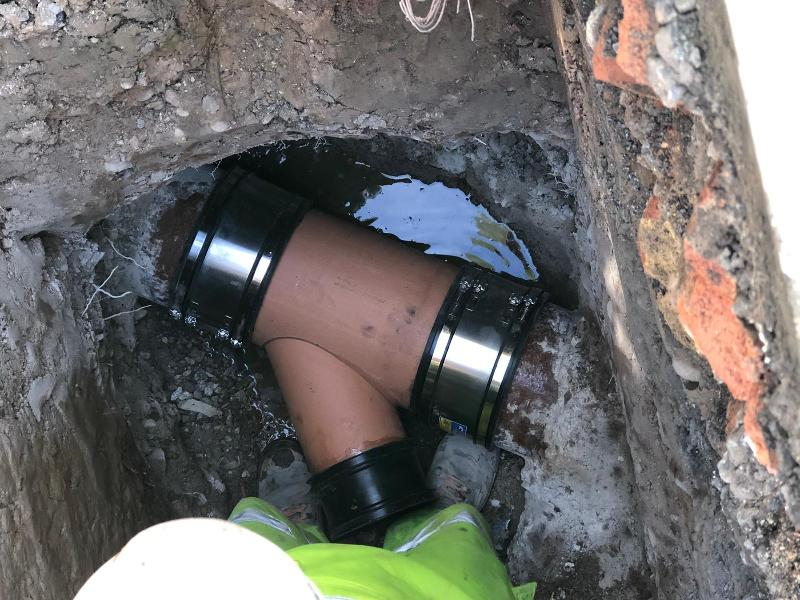
These have a branch line entering the main line at an angle of 45 degrees. This ensures that the flow from the branch enters the flow of the main line at pace, without causing disruption or backwash. Any connection from a toilet or soil vent pipe should be made using an oblique junction, and it is generally good practice to use them on all connections if possible.
Square drainage junctions
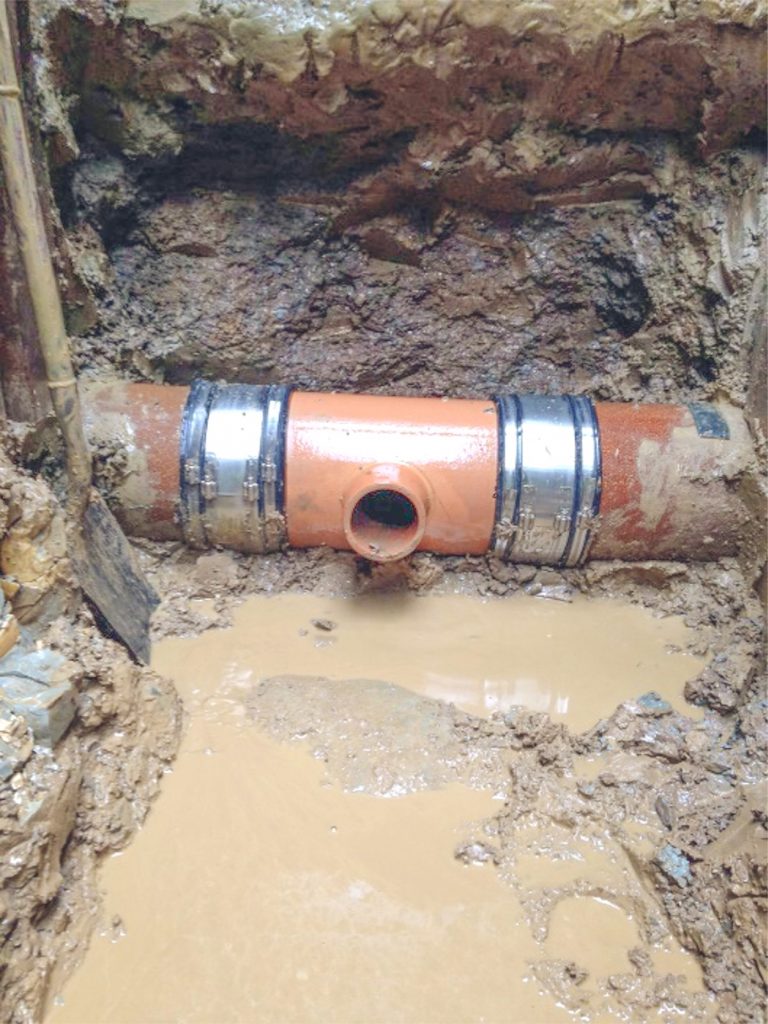
These are also known as curved square junctions, and have the branch line entering at 90 or 87 ½ degrees. They are suitable for storm system connections, and they are also utilised for rodding points, backdrops prior to chambers, and dip pipes on septic tanks.
It is standard practice on older drainage systems to connect two lines together using the above junctions without any consideration for access into the branch line at a later date. Modern day specifications, however, lean towards installing inspection chambers at points where there are changes of direction or at the point that a toilet line connects into the main line drainage. For this reason, there are numerous pre-formed manhole bases available with built-in channel junctions entering at 45- and 90-degree angles.
The problem here is that if you install a chamber at every connection for gullies and toilet lines, you could end up with numerous chambers around the property. Whilst chambers are a necessity at some points on the system, you can often install roddable gullies or rodding access points on soil vent pipes, in order to keep the number of inspection chambers to a minimum. If you are undertaking a new-build project, you should speak to a local building control officer prior to installing a system to find out their minimum requirements.
Saddles
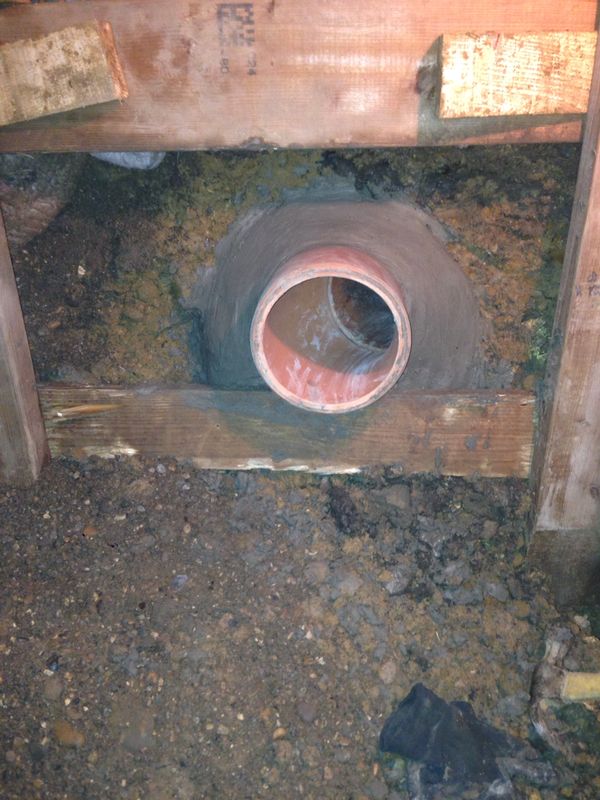
Originally, drainage saddles were developed so that bodged connections could be made in a controlled and structural manner. The saddles had an outer flange to prevent the connection from protruding into the outfall pipe and they were produced in 45- and 90-degree angles.
The idea was that you use a template to carefully cut a correct-sized hole in the outfall pipe before fitting the saddle, then use concrete to seal the pipe on the outside, and a fast-setting mortar to create a smooth and watertight seal on the inner wall.
Existing manholes
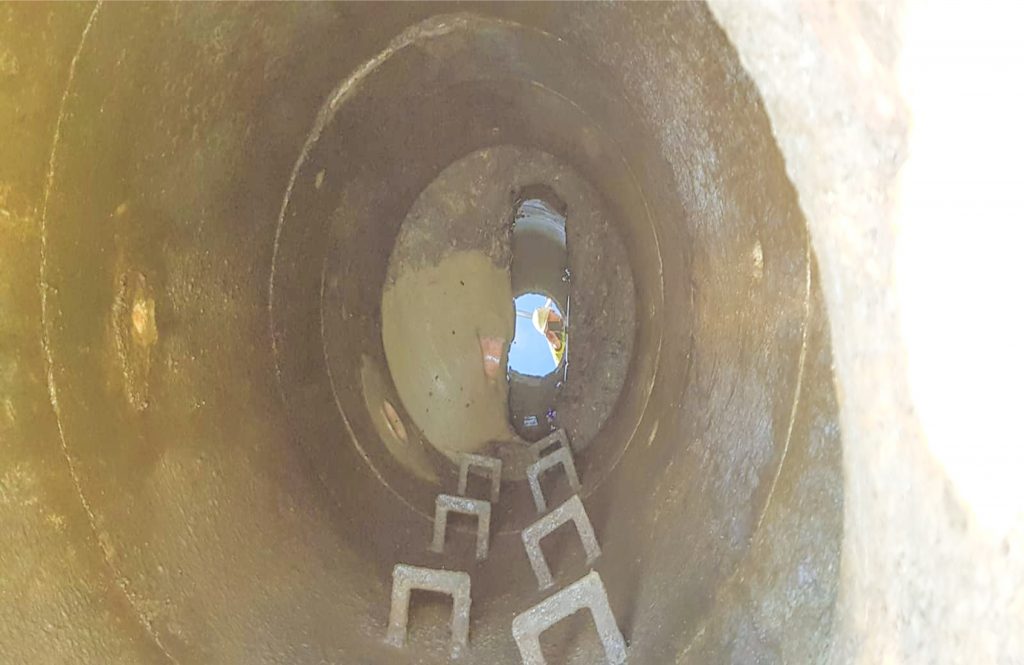
This is not a preferred method of connection as the existing manhole may not be able to accommodate the new connection. This can be checked, before you apply for your connection, with an onsite visit from Premier Drainage Solutions.
If the manhole is suitable, the new pipe must be connected in such a manner that the soffit levels of the existing and new pipes are the same. Where the existing manhole has a preformed invert, then the invert of the connection should be formed and made good in granolithic concrete as required. Pipes in manholes should never be plastic.
If it is impractical (due to corresponding pipe levels) to connect into the existing manhole at the same soffit level as the existing public sewer, then a backdrop arrangement may be constructed outside the manhole chamber to ‘Sewers for Adoption’ 7th Edition specification. Internal backdrops are rarely accepted and may only be considered upon application, in which case they should be ductile iron. Detailed drawings and method statements must be submitted for express written approval.